TEST: When Science Meets Dance
Based in the rural village of Linton, just eight miles south of Cambridge, stands Linton Village College (LVC). Established in 1937 by the visionary educator Henry Morris, LVC has kept Morris’s love for the arts alive, making it an essential part of our curriculum.
As part of Anglian Learning, a multi-academy trust (MAT), LVC has a strong emphasis on providing a well-rounded education to all our students, with the arts playing a key role in their development.
LVC’s Artsmark journey has taken our school on a path of innovation and collaboration. Striving to deepen students’ learning beyond the curriculum, our innovative Science and Arts collaboration has sparked new connections between STEM subjects and the creative arts.
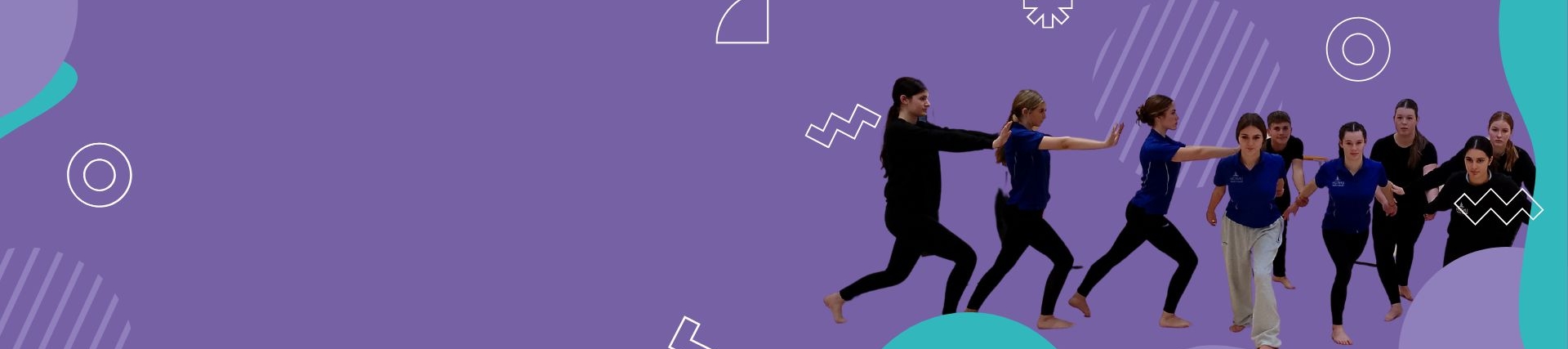
We have been fortunate to build a relationship with the Medical Research Council Laboratory of Molecular Biology (LMB) in Cambridge, one of the world’s leading research institutes, dedicated to understanding important biological processes at the levels of atoms, molecules, cells and organisms. During National Science Week, Dr Denise Walker of LMB delivered a talk to our Year 10 students about her research into the neurobiology of touch and pain and how she uses a small nematode as a model to investigate this. We invited our Year 10 GCSE Dance group to create a piece of choreography about this scientific knowledge.

Over the course of six weeks, these Dance students created a highly original choreographic response, choosing two specific areas of the research to focus on.
The students used images and knowledge from Dr Walker’s presentation to create an interpretation of the scientific knowledge. The learning process was rich, as the students were discussing their ideas using both Science and Dance terminology. This simultaneous learning experience enabled the students to deepen their learning in both subjects, and refine a variety of choreography tools in preparation for their GCSE work.
The choreography was then performed at our summer Science and Arts evening. Parents were invited to this evening, and also saw dance pieces based on Evolution and Cloning from our extra-curricular Dance groups. These performances were interspersed with scientific demonstrations and outdoor experiments. Whilst we often publicly showcase the arts with our school community, it was exciting for them to see the collaboration between the Science and Arts departments.
The impact for our students was valuable as they fostered a connection between two seemingly contrasting subject areas. One Year 10 student recalled:
To be able to learn and explore science from outside the normal lab space, via dance, in such a way where you can be creative and personal, shows that unity between subjects does not just fall within the basics of Science and Maths or Drama and Dance.
We hope that this collaboration between the Science and Arts departments, in addition to working with an external research institute, will contribute to the deepening of our students’ thinking across subjects. We developed this cross-curricular learning because of our Artsmark journey, and we will continue to provide deeper, authentic, learning opportunities for our students.
Register for Artsmark to embed arts, culture and creativity across your whole curriculum.
